


SNOC Course Reflection:Sustainable Transition Management
- 2026-07-07
Shi Guohao | IMBA-1, Class of 2027
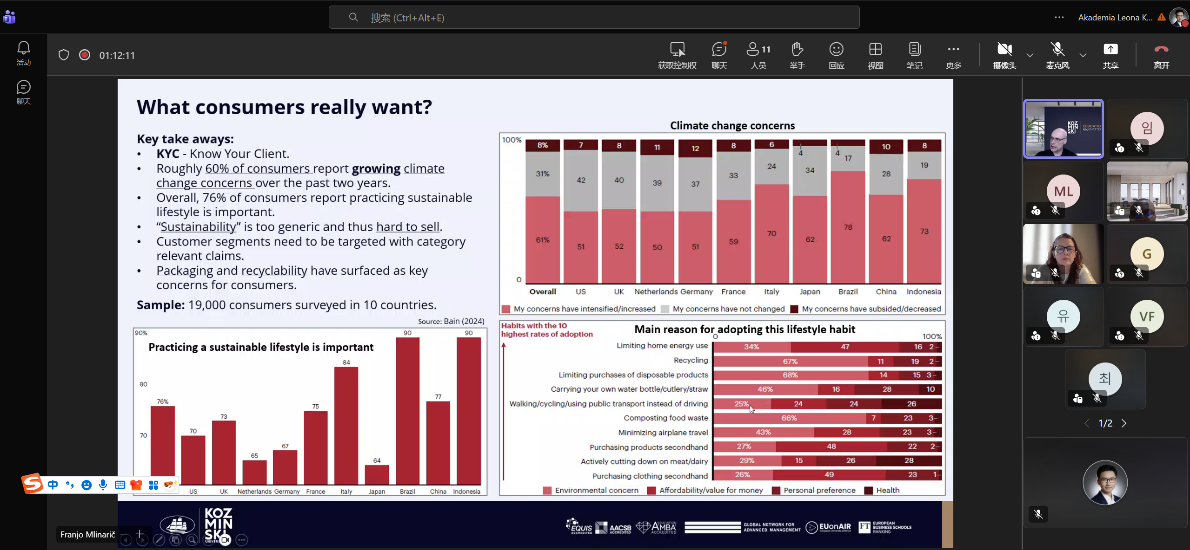
In early 2026, I received an acceptance to the "Sustainable Transition Management" SNOC course offered by Kozminski University in Poland. Kozminski is one of Europe’s leading private business schools, widely recognized for its strength in finance and management. It is the only Polish institution ranked among the Financial Times’ top 100 European business schools, and its ESG-related programs carry a strong reputation in the field, which was one of the main reasons this course caught my attention.
Why I Applied
ESG has become a major focus in global sustainability research in recent years. Poland, as a country at the forefront of industrial transition within the EU framework, has both deep experiences navigating ESG regulatory requirements and a wealth of hands-on corporate transformation cases. My background includes several years in overseas infrastructure project development, with ongoing exposure to ESG compliance challenges in cross-border contexts. Following the formal implementation of the EU’s Carbon Border Adjustment Mechanism (CBAM) in January 2026, questions around carbon accounting standards and international recognition have sparked widespread discussion in China. I wanted to use this course as an opportunity to gain direct insight into the EU’s policy logic and how companies are responding in practice.
Scheduling and Credit
The course consists of seven sessions of three hours each, concentrated in February and March. This timing worked out well, most of the course fell during winter break, which helped ease the workload during the spring semester. The credits also converted to two elective credits on the RUC side, making it a practical fit overall.
Application Process
The school typically releases course information the previous November. The application requires a CV in English and a motivation letter of around 300 words. My advice: be straightforward and genuine. You don’t need overly formal or elaborate language, just show enough professional grounding and explain clearly why you want to take this particular course. Authentic motivations tend to be more convincing than generic statements. About two weeks before the course started, Kozminski sent a confirmation email with the syllabus and online class link.
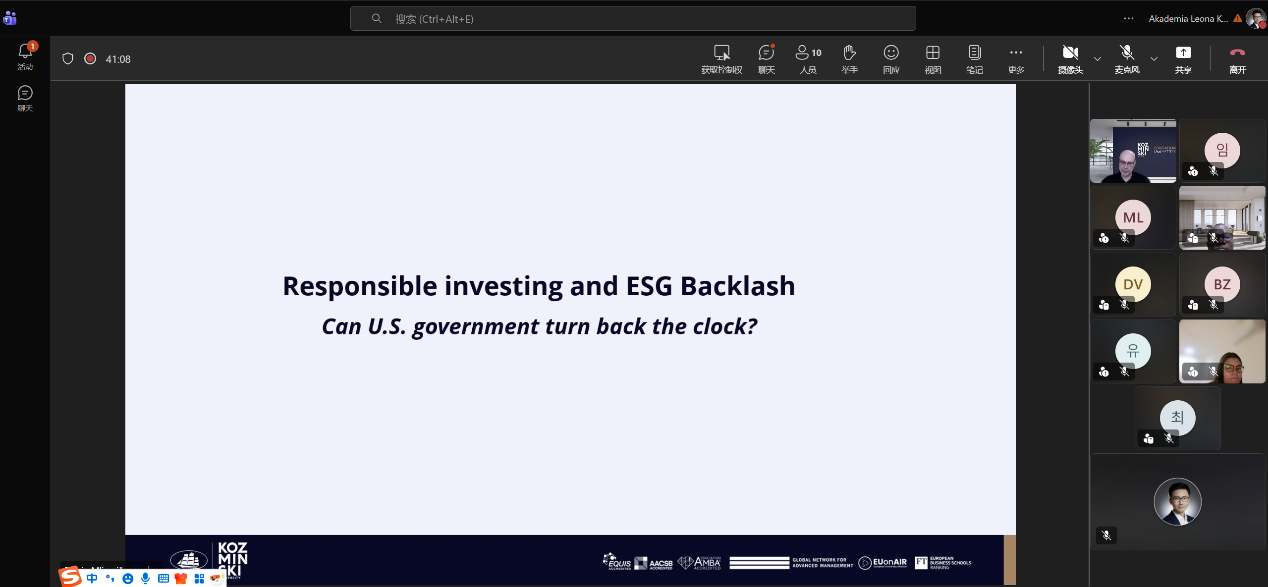
Our class had 14 students from Spain, Italy, Nigeria, the Philippines, South Korea, and China, a genuinely diverse group. Before the course began, the instructors had already divided us into teams. Each group selected a publicly listed company in the first session, which then became the central case running through all subsequent analyses and presentations.
Two Instructors, Two Perspectives
One of the course’s highlights was its co-teaching format, with sessions alternating between an academic and an industry professional. Professor Franjo Mlinarič is a founding member of the Polish Sustainable Investment Forum (POLSIF) and serves as Director of the ESG Research Center at Kozminski University, with an extensive publication record in sustainable finance and ESG transition models. Mr. Przemysław Wasilewski has held senior roles at several Fortune 500 companies in the energy and chemical sectors, and now focuses on sustainable strategy and ESG risk management. The two complemented each other well in the classroom: Franjo tended to anchor discussions in strategic frameworks and policy reasoning, while Przemysław consistently brought theory back to earth with real-world business decision scenarios.
Course Structure
The curriculum built progressively, pairing theory with practice at each stage: from the impact of ESG factors on business models, to sustainable value creation, stakeholder strategy, transition planning, KPI frameworks, and governance improvement. The final week culminated in a simulated consulting presentation covering the full scope of the course.
One session that stood out was the Week 6 case on ABB’s sustainable equity story. The instructors walked us through how a real industry leader had embedded ESG logic into its strategic narrative and investor communications — not as a compliance checkbox, but as a core part of the business case. That reframing stuck with me. The real challenge in ESG isn’t just "what have you done", it’s "how do you convince the market that what you’re doing will create long-term value."
Group Project
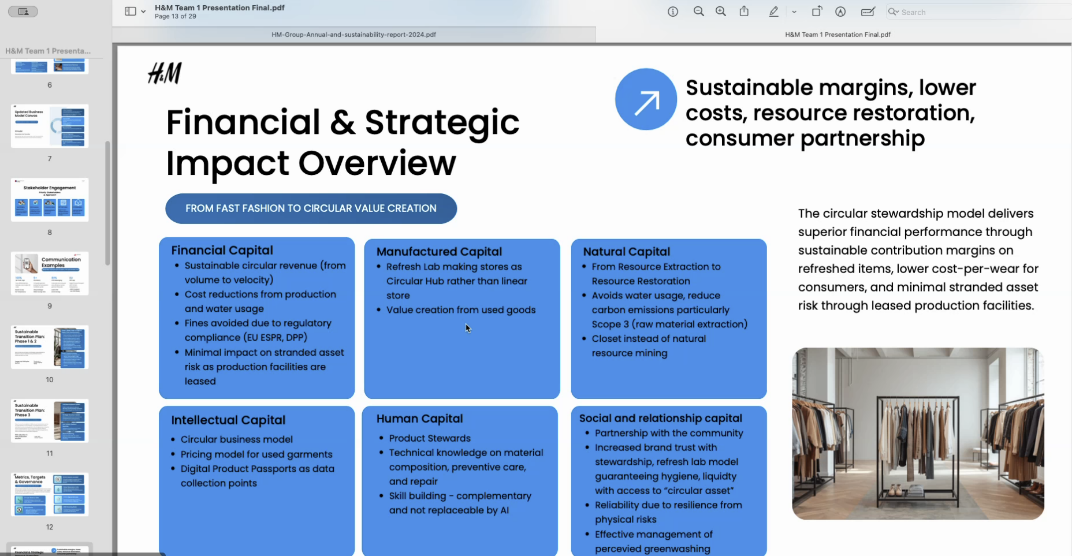
I worked with classmates from South Korea and Nigeria, and we chose Maersk — the global shipping giant, as our subject. We mapped out the company’s approach to low-carbon fuel transition, supply chain decarbonization, and climate disclosure, and developed a comprehensive sustainable transition proposal covering ESG risk identification and stakeholder strategy.
Key Takeaways
The most significant insight I took away from this course is that ESG transition in the EU context is not simply about regulatory compliance, it represents a fundamental shift in how capital allocation is being rethought. In my previous work, I’ve seen how companies expanding overseas often find themselves in a reactive mode when it comes to navigating host-country regulations and international financing standards — managing compliance, not driving strategy. This course gave me the first real opportunity to examine that dynamic from a strategic vantage point. When mechanisms like the EU’s CBAM begin internalizing external carbon costs as trade costs, companies without genuine transition capacity don’t just face fines — they face a structural narrowing of market access.
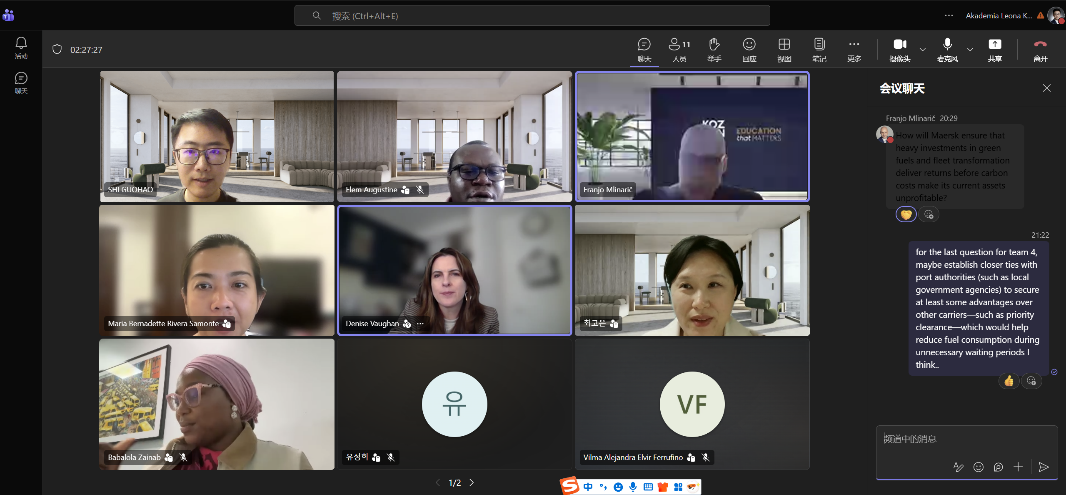
The international makeup of the class also brought unexpected richness to the discussions. Hearing how peers from the Philippines and Nigeria were thinking about infrastructure companies in their own markets, how they’re approaching EU CBAM and similar new regulations, revealed just how differently the same external pressures land across different institutional environments and business cultures. That kind of immediate, globally diverse exchange of perspectives around newly enacted regulations is, I think, exactly what the SNOC program is designed to offer.
Practical Tips
Keep track of time zones and daylight-saving time. Poland observes daylight saving time, so set calendar reminders to avoid confusion around session times.
Plan group collaboration early. Team members may span three to four time zones, so it’s worth agreeing on shared tools (such as Google Docs) from the start to minimize the coordination overhead that comes with scheduling across time differences.
Test your tech before class. Kozminski uses Microsoft Teams; some other schools use Zoom or similar platforms. Run an audio and video check ahead of the first session. In a small-group setting, keeping your camera on throughout is standard practice, if your built-in webcam quality is poor, an external camera is a worthwhile investment.
Put real thought into your motivation letter. The more specific it is, the more persuasive it will be. Tie it to your actual background and career direction, and make clear why this particular course matters to you, not just why ESG in general is interesting.
Follow up on grade conversion and credit transfer. Kozminski typically sends transcripts to the RUC coordinator within a month of the course ending. Once you receive your converted grade, remember to submit the credit transfer application through the RUC graduate system promptly.